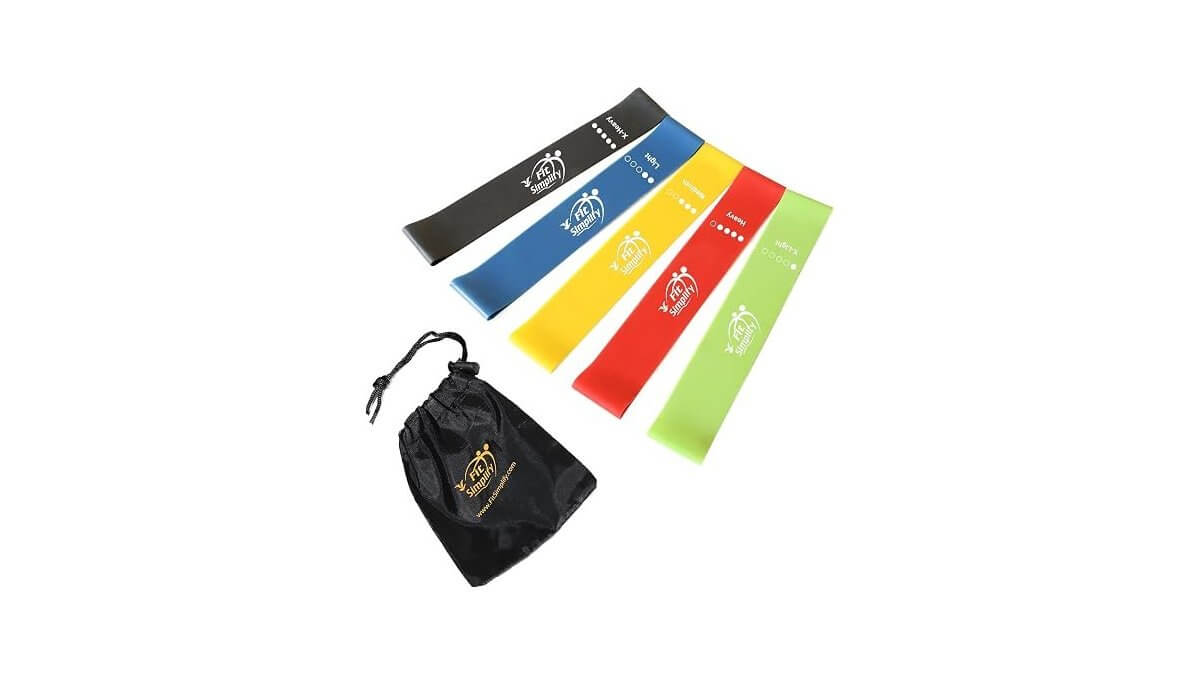
Fit simplify resistance loop bands come in rubber for classic training or fabric for better comfort and grip. The main difference is how they feel against your skin and how much they resist rolling during use. These options suit different fitness goals and body types.
Best overall: Fit Simplify Loop Bands offer five distinct levels for everyone from beginners to seasoned athletes. Most durable: Fabric Resistance Loops use non-slip fabric to prevent rolling during intense leg and glute exercises. Best for precision: 10 Inch Loop Bands provide a smaller, tighter fit that’s ideal for focused muscle training.
This guide is for anyone looking to improve their strength training at home without bulky equipment.
As an Amazon Associate, we earn from qualifying purchases. This post contains affiliate links – if you buy through them, we may earn a commission at no extra cost to you.
How We Picked
A product earned a spot only if the listing clearly stated its resistance levels, material composition, and included accessories. We excluded any items that didn’t provide a clear list of what comes in the package. Our focus remained on items that help users perform a variety of exercises at home.

- 12" by 2" loop bands
- 5 varying resistance levels
- Includes carry bag
- Includes illustrated exercise booklet

- Durable non-slip fabric material
- Light (20-35lbs), medium (30-50lbs), heavy (45-70lbs)
- Includes carry bag
- Suitable for mobility and recovery

- 10 inch by 2 inch bands
- Extra light, light, medium, heavy, extra heavy
- Includes storage bag
- Includes ankle straps, handles, door anchors
1. Fit Simplify Loop Bands
Best for: Beginners and those needing a full-body set.
These bands come in five color-coded levels, ranging from extra light to extra heavy. Because they offer such a wide range of resistance, they’re useful for everything from light stretching to intense strength training. You can easily integrate them into existing workout programs or use the included manual to learn new moves.
If you’re a beginner, start with the extra light or light bands to build a foundation. If you’re a seasoned warrior, move directly to the medium, heavy, or extra heavy bands for your strength training. You can tell which band to choose by the color-coding; if a movement feels effortless, you’re likely using a band too light for your current strength level.
The carry bag makes it simple to store the set or take it to the gym. Since they’re designed for varied fitness levels, they work well for people recovering from leg, knee, or back injuries. Physical therapists often use these for patient rehabilitation. If you need a single set to cover every exercise, this is a strong choice.
Pros
- Five distinct resistance levels included.
- Includes a portable carry bag.
- Comes with an illustrated instruction guide.
Cons
- Not for those preferring fabric textures.
2. Fabric Resistance Loops
Best for: Glute activation and high-intensity leg workouts.
These loops are crafted from fabric rather than rubber, which helps them stay in place during movement. Because they feature a non-slip design, they’re less likely to roll up your legs during squats or glute bridges. This makes them a more comfortable choice for long sessions or repeated exercises.
The kit includes three levels of resistance: light (20-35lbs), medium (30-50lbs), and heavy (45-70lbs). Match your band to the movement to ensure proper form. Use the light band for high-repetition mobility work, while reserving the heavy band for compound movements like squats. If you feel the band sliding, check your placement; fabric grips better against skin or tight leggings than loose fabric.
They’re effective for both men and women who want to target specific muscle groups without the bands slipping. If you find standard rubber bands uncomfortable or annoying, this fabric set solves that issue.
Pros
- Durable, non-slip fabric construction.
- Prevents rolling during exercise.
- Three levels of progressive resistance.
Cons
- Fewer resistance levels than rubber sets.
- Heavier feel than traditional latex bands.
3. 10 Inch Loop Bands
Best for: Targeted muscle isolation and compact training.
With a 10-inch diameter, these bands are smaller than standard loops. This tighter fit creates immediate tension, which is essential for focused movements like ankle or shoulder work. Use them when you need to isolate specific muscle groups rather than perform broad, sweeping motions.
The set includes a full spectrum of resistance ranging from extra light to extra heavy. This scale allows you to adjust your resistance as your strength improves. If you find yourself struggling to maintain form during a movement, drop down one level. If you can complete three sets of fifteen repetitions without feeling fatigue, move up to the next color.
These bands are portable and include a storage bag for easy transport. However, they aren’t the best choice if you have larger limbs or require a wide range of motion for full-body stretches. The listing doesn’t mention the causes of rolling or pinching.
Pros
- Tighter fit for better muscle isolation.
- A comprehensive range of resistance is provided.
- Includes a convenient storage bag.
Cons
- Shorter length limits some full-body stretches.
- May feel too tight for larger users.
How to Choose in Sixty Seconds
Which material is better for me?
Rubber bands are versatile and often come with more resistance levels in a single set. Fabric bands are better if you hate it when your gear rolls or pinches your skin during exercise. If you prioritize comfort during long workouts, choose fabric. If you want maximum variety for strength training, choose rubber.
Does the band length matter?
Yes, length changes how the band feels during use. A 12-inch band is standard for most, while a 10-inch band provides more tension for smaller, targeted movements. If you’re a beginner, start with the standard 12-inch size to ensure you have enough room for all types of exercises.
What should I check before I buy?
Always check the resistance levels included in the set. A good set should provide clear, color-coded levels so you can track your progress. Ensure the package includes a carry bag and a guide, as these extras make it much easier to start and maintain a consistent daily workout routine.
If you’re choosing fabric, look for specific weight ratings. Some sets offer light (20-35lbs), medium (30-50lbs), and heavy (45-70lbs) options. This helps you match the band to your specific fitness level.
Fit Simplify Loop Bands remain the best overall choice due to their versatility and wide range of resistance. Fabric Resistance Loops are the top pick if you struggle with bands rolling during your leg day. Start by checking your space and identifying which muscle groups you want to target most often. If your goal is rehabilitation or physical therapy, look for sets that specifically mention their use for injury recovery.
Frequently Asked Questions
Do these bands require extra equipment?
No, these bands are designed as standalone tools for home exercise. You don’t need handles, anchors, or machines to get a full-body workout. While some sets mention door anchors in their descriptions, the loop bands themselves function perfectly on their own for strength training and physical therapy movements.
How do I clean my bands?
Cleaning depends on the material, but most rubber bands can be wiped down with a damp cloth and mild soap. Fabric bands can often be hand-washed if they get sweaty. Always allow them to air dry completely away from direct sunlight.
What causes a band to snap?
Bands may be damaged if they’re stretched beyond their capacity or exposed to sharp objects. Inspect your bands for small nicks or tears before each use. If you see damage, stop using that band immediately. High-quality sets are tested, but regular wear is normal after long periods of consistent use.
Is the simplest set enough for me?
Yes, a basic set with a variety of resistance options is enough for most people to start. You can perform hundreds of exercises for your arms, legs, and core with just these items. If you find you need more resistance later, you can always move up to the “heavy” or “extra heavy” bands in your set.
Conclusion
Whether you prefer the smooth stretch of rubber or the sturdy hold of fabric, your choice will shape your daily movement. Don’t let your gear sit in a drawer gathering dust. Pick the set that feels best for your body, and you’ll find it’s much easier to stay consistent with your workouts.

“As the voice behind Radiant Glow Health, we are dedicated to being your ultimate wellness and vitality companion. Our mission is to inspire and guide you on your journey to a healthier and more vibrant life. Join us as we explore holistic health practices and empower you to radiate wellness from within.”