Are you ready to take control of your eating habits but don’t know where to start? Changing the way you eat doesn’t have to be overwhelming or complicated.
Imagine feeling more energetic, improving your mood, and even managing your weight—all by making simple, smart choices each day. This guide will show you how to get into good eating habits that stick, without strict diets or impossible rules. You’ll learn easy steps to enjoy delicious, wholesome foods while making lasting changes that fit your lifestyle.
Keep reading to discover how small shifts can lead to big health benefits and a happier you.
Choose Whole Foods
Choosing whole foods is a key step to better eating habits. Whole foods are natural and less processed. They contain more nutrients and fewer additives. Eating whole foods helps your body get vitamins, minerals, and fiber it needs. It also supports steady energy and better digestion.
Focus on adding fresh, simple foods to your meals. Swap out processed snacks and meals for whole fruits, vegetables, grains, and proteins. This change can improve how you feel every day.
Fruits And Vegetables
Fruits and vegetables are rich in vitamins and minerals. They come in many colors and flavors. Eat a variety of them daily. Fresh, frozen, or canned without added sugar or salt are good choices. They add fiber to your diet. Fiber helps keep your digestion healthy and your stomach full longer.
Try to fill half your plate with fruits and vegetables at each meal. Snack on raw veggies or fresh fruit instead of chips or candy.
Whole Grains And Beans
Whole grains like brown rice, oats, and whole wheat bread have more nutrients than refined grains. They provide energy and fiber. Beans and lentils are great plant-based protein sources. They also have fiber and important minerals. Include these foods in meals to stay full and support your heart health.
Choose whole-grain pasta or bread instead of white versions. Add beans to salads, soups, or side dishes for extra nutrition.
Lean Proteins
Lean proteins help build muscle and repair tissues. Good options include fish, chicken, turkey, eggs, and low-fat dairy. Plant-based proteins like tofu and beans also work well. Avoid fatty cuts of meat and fried proteins. These add unhealthy fats and extra calories.
Cook proteins with healthy methods like grilling, baking, or steaming. This keeps meals tasty and good for your body.

Credit: www.summerhealth.com
Hydrate Smartly
Hydration plays a key role in building good eating habits. Drinking enough fluids helps the body function well and supports overall health. Choosing the right drinks fuels the body without extra calories or sugar. Smart hydration means picking water and healthy alternatives over sugary options. This step keeps hunger in check and boosts energy naturally.
Water And Unsweetened Drinks
Water is the best choice for hydration. It contains no calories and helps flush out toxins. Drinking plain water throughout the day keeps the body refreshed and alert. Unsweetened drinks like herbal tea or black coffee also hydrate without adding sugar. These drinks can be enjoyed hot or cold. They provide variety without harming your health.
Limit Sugary Beverages
Sugary drinks add empty calories and can lead to weight gain. Soda, fruit juices, and sweetened teas often contain high sugar amounts. These drinks cause blood sugar spikes and crashes. Limiting these beverages improves energy levels and supports weight control. Replace sugary drinks with water or unsweetened options to build healthier habits.
Cook More At Home
Cooking more at home offers control over your food choices. It helps build good eating habits naturally. Preparing meals yourself lets you choose fresh, healthy ingredients. It also limits unhealthy additives found in restaurant and packaged foods.
Home cooking encourages mindful eating. You can adjust flavors and nutrition to suit your needs. It supports better portion control and reduces reliance on processed snacks. Making meals at home saves money and boosts your cooking skills.
Use Minimally Processed Ingredients
Choose fresh fruits and vegetables for your meals. Select whole grains like brown rice or whole wheat pasta. Use lean proteins such as chicken, fish, or beans. Avoid pre-packaged meals with long ingredient lists. The fewer the ingredients, the better for your health.
Fresh ingredients keep meals nutritious and flavorful. They contain more vitamins and minerals than processed foods. Cooking with whole foods reduces added sugars and unhealthy fats. Your body thanks you with more energy and better digestion.
Control Salt, Sugar, And Fat
Measure salt carefully to avoid excess intake. Use herbs and spices to add flavor without salt. Limit sugar by cutting back on sweets and sugary drinks. Try natural sweeteners like honey or fruit in moderation.
Choose healthy fats such as olive oil or avocado. Avoid fried foods and processed meats high in unhealthy fats. Cooking at home lets you use the right amount of oil. This helps maintain heart health and supports weight management.
Practice Portion Control
Practicing portion control is a simple way to eat healthier. It helps avoid overeating and keeps calorie intake in check. Small changes in portion size can make a big difference over time. Learning to control portions supports better digestion and sustained energy throughout the day.
Smaller Plates
Using smaller plates tricks your mind into feeling satisfied with less food. It reduces the chance of piling large servings. This visual cue helps control meal size naturally. Smaller plates encourage mindful eating and prevent overeating without feeling deprived.
Fill Half With Fruits And Veggies
Filling half your plate with fruits and vegetables boosts fiber and nutrients. These foods are low in calories but high in volume. They keep you full longer and add color and flavor to meals. This habit improves digestion and supports overall health by providing essential vitamins and minerals.
Start Small
Starting small helps make good eating habits easier and less stressful. Big changes can feel overwhelming and hard to keep. Small steps build steady progress. Each little change creates a better daily routine.
Focus on simple, manageable goals. This way, healthy eating becomes natural. Your body and mind adjust well to gradual shifts. Enjoy the process and notice how small habits add up over time.
Add One Healthy Item At A Time
Begin by adding one healthy food to your meals. Try a piece of fruit with breakfast or a side of vegetables at dinner. This adds nutrients without changing your entire diet.
Choose foods you like. This keeps you motivated and avoids frustration. Over time, your plate will look fuller of fresh, wholesome foods. Small additions create a big impact on your health.
Avoid Overhauling All At Once
Changing everything at once can lead to stress and giving up. Your body and habits need time to adjust. Focus on one or two changes each week. This creates a steady path toward better eating.
Keep old favorites for now but eat less of unhealthy options. Swap one item at a time. This method helps build confidence and lasting habits. Slow and steady wins the race.
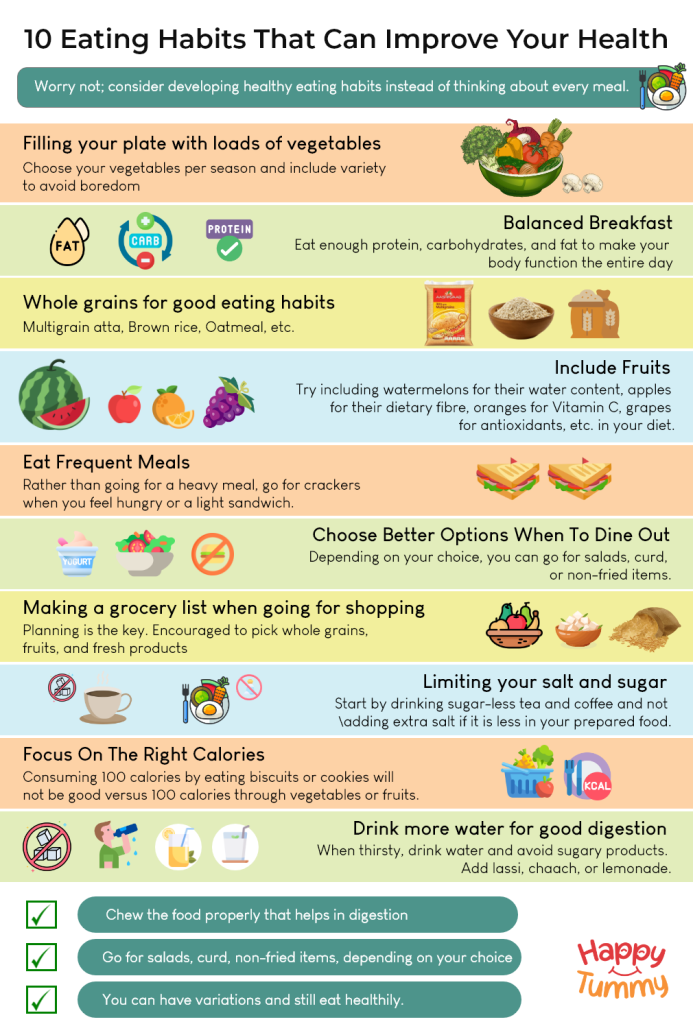
Credit: happytummy.aashirvaad.com
Plan Meals Ahead
Planning meals ahead makes healthy eating easier and less stressful. It helps you avoid last-minute choices that are often unhealthy. Preparing meals in advance also saves time and money. You get control over ingredients and portion sizes. This habit leads to better nutrition and consistent eating patterns.
Meal Prepping
Meal prepping means cooking food before mealtime. It can be done for a few days or a whole week. Prepare simple meals like grilled chicken, steamed vegetables, or cooked grains. Store food in containers ready to heat and eat. This reduces the chance of eating fast food or snacks.
Choose recipes that you enjoy and are easy to make. Chop vegetables and portion proteins in advance. Keep healthy snacks like nuts and fruit handy. Meal prepping keeps you on track with your good eating habits.
Weekly Meal Planning
Weekly meal planning involves deciding meals for the entire week. Write down breakfast, lunch, dinner, and snacks. Check your kitchen for ingredients before making a shopping list. This prevents buying unnecessary items and food waste.
Plan balanced meals with vegetables, proteins, and whole grains. Include different colors and textures for variety. Planning helps you stick to healthy choices and avoid impulse buys. It also reduces stress about what to eat each day.
Make Smart Swaps
Making smart swaps in your diet can improve your health without feeling like a sacrifice. Small changes add up and help you build good eating habits. These swaps make meals more nutritious and satisfying. Here are some simple swaps to try today.
Whole-grain Instead Of Refined
Choose whole-grain bread, pasta, and rice instead of refined versions. Whole grains have more fiber, vitamins, and minerals. They keep you full longer and support digestion. Refined grains lose many nutrients during processing. Whole grains help balance blood sugar and reduce hunger.
Healthy Fats Over Unhealthy Fats
Use healthy fats like olive oil, avocado, and nuts instead of butter and margarine. Healthy fats support heart health and brain function. Unhealthy fats, found in fried foods and processed snacks, can raise bad cholesterol. Swapping fats improves your energy and lowers disease risk.
Fresh Or Frozen Veggies
Pick fresh or frozen vegetables over canned or processed ones. Fresh veggies are rich in vitamins and minerals. Frozen vegetables keep most nutrients and are easy to store. Avoid canned veggies with added salt or sugar. Vegetables add fiber and color to your plate.
Eat Mindfully
Eating mindfully means paying full attention to your food and the experience of eating. This practice helps you enjoy your meals more and make healthier choices. Mindful eating slows down your pace and tunes you into your body’s hunger and fullness signals. It reduces overeating and improves digestion. Here are simple ways to eat mindfully and build good eating habits.
Slow Down And Savor
Take time to chew each bite carefully. Tasting your food fully makes meals more enjoyable. Slow eating helps your brain catch up with your stomach. This reduces the chance of eating too much. Try putting your fork down between bites to slow your pace. Notice the flavors, textures, and smells of your food.
Avoid Distractions
Turn off TVs, phones, and other screens while eating. Focus only on your meal and your body’s signals. Distractions cause mindless eating and overeating. Eating without distractions helps you recognize when you feel satisfied. Create a calm environment for meals to improve your focus on eating.
Recognize Fullness Signals
Listen to your body during meals. Stop eating when you feel comfortably full, not stuffed. Fullness signals can be subtle, like a feeling of satisfaction or a drop in hunger. Paying attention to these signs prevents overeating. Trust your body to tell you when enough is enough.
Use Herbs And Spices
Using herbs and spices is an easy way to improve eating habits. They add flavor without extra calories or salt. Herbs and spices also offer health benefits. They contain antioxidants and can reduce inflammation. Incorporating them into meals makes food more enjoyable and nutritious.
Replace Salt With Flavors
Salt can raise blood pressure and harm heart health. Using herbs and spices cuts down salt use. Try garlic, onion powder, or paprika for bold taste. Fresh herbs like basil, cilantro, and parsley brighten dishes. Experiment with lemon zest or pepper for a fresh twist. These options make meals tasty without extra salt.
Explore New Tastes
Herbs and spices come from many cultures. Exploring them adds variety to your diet. Try cumin or turmeric for warmth and earthiness. Use ginger or cinnamon for a sweet, spicy note. Mixing different spices creates new flavors. This keeps meals exciting and helps stick to good eating habits.
Limit Added Sugars And Salt
Limiting added sugars and salt plays a big role in healthy eating habits. These ingredients often hide in many foods and drinks. Eating too much sugar and salt can harm your health. It can cause weight gain, high blood pressure, and other problems. Reducing them helps your body stay strong and balanced.
Cut Sugary Drinks And Sweets
Sugary drinks add many empty calories to your diet. Soda, energy drinks, and sweetened juices have lots of sugar. They cause quick spikes in blood sugar, then crashes that leave you tired. Choose water, unsweetened tea, or coffee instead. For sweets, limit candies, cookies, and pastries. Try fresh fruit to satisfy your sweet tooth naturally. Small changes like these reduce your daily sugar intake.
Avoid Salty Processed Foods
Processed foods often contain high salt levels. Chips, canned soups, frozen meals, and deli meats are common sources. Salt helps preserve food but can raise your blood pressure. Check food labels for sodium content. Cook more meals at home to control salt use. Use herbs and spices for flavor instead of salt. Eating less processed food lowers your salt intake and boosts health.
Reduce Unhealthy Fats
Reducing unhealthy fats plays a key role in building good eating habits. These fats can raise bad cholesterol and increase heart disease risk. Choosing healthier fat options supports overall wellness and energy levels.
Minimize Butter And Full-fat Dairy
Butter and full-fat dairy contain high saturated fat levels. Saturated fats can clog arteries and raise cholesterol. Switch to low-fat or fat-free dairy products like milk, yogurt, and cheese. Use plant-based spreads or small amounts of olive oil instead of butter. These changes reduce unhealthy fat intake without losing taste.
Avoid Fried And Processed Meats
Fried meats absorb extra unhealthy fats from cooking oils. Processed meats like bacon, sausages, and deli slices often contain added fats and preservatives. These fats increase the risk of heart disease and other health problems. Choose lean meats such as chicken, turkey, or fish. Grilling, baking, or steaming are healthier cooking methods that limit fat intake.
Cut Refined Grains
Cutting refined grains is a simple step toward better eating habits. These grains lose much of their fiber and nutrients during processing. Eating less refined grains helps control blood sugar and improves digestion.
Choose whole grains instead. They keep you fuller longer and provide steady energy. Small changes in your daily bread and rice can make a big difference.
Limit White Bread And Rice
White bread and white rice are common refined grains in many diets. They digest quickly and cause blood sugar spikes. Replace white bread with whole wheat or multigrain bread. Swap white rice for brown rice or quinoa. These options have more fiber and vitamins. They support heart health and weight control.
Avoid Sugary Cereals
Sugary cereals often contain refined grains plus added sugar. They provide empty calories with little nutrition. Instead, try oatmeal or whole-grain cereals with no added sugar. Add fresh fruit or nuts for natural sweetness and crunch. This choice fuels your body better and reduces sugar crashes.
Build A Positive Mindset
Building a positive mindset is key to developing good eating habits. It shapes how you view food and your progress. A healthy mindset helps you stay motivated and make better choices daily.
Changing eating habits takes time and patience. Focusing on your mindset supports steady growth and success.
Be Patient With Progress
Good eating habits do not form overnight. Small changes add up over time. Accept that mistakes will happen and learn from them. Patience reduces frustration and helps you keep going. Celebrate each step forward, no matter how small.
Focus On Consistency, Not Perfection
Eating well every day is better than trying to be perfect once in a while. Aim for regular healthy choices, even if they are simple. Consistency builds strong habits that last. Don’t let one slip-up stop your progress. Keep trying and stay steady.

Credit: www.senioradvisor.com
Aim For Sustainable Changes
Making lasting changes in eating habits takes time and patience. Quick fixes often fail because they are hard to keep. Aim for changes that fit your life and feel natural. Small steps add up to big results over time.
Focus on habits that you can keep for months and years. This approach helps your body and mind adjust without stress. Consistency beats intensity. Choose foods and routines that bring balance and joy.
Avoid Fad Diets
Fad diets promise fast weight loss but often lack nutrients. They can cause tiredness, hunger, and mood swings. Most fad diets cut out entire food groups, which harms your health. Avoid diets that sound too good to be true. Instead, pick balanced meals with a variety of foods. This keeps energy steady and supports overall health.
Create Long-term Healthy Habits
Start with simple habits like adding vegetables to meals or drinking more water. Plan meals ahead to prevent last-minute unhealthy choices. Cook at home to control ingredients and portion sizes. Swap white bread for whole grain and sugary drinks for water. These small changes build a strong foundation. Over time, these habits become natural and easy. Your body thanks you with better energy and well-being.
Frequently Asked Questions
How To Start Healthy Eating Habits?
Start healthy eating by choosing whole foods like fruits, vegetables, and whole grains. Drink plenty of water. Cook meals at home. Control portions using smaller plates. Plan meals ahead and swap unhealthy items for nutritious alternatives gradually for sustainable habits.
What Is The 3-3-3 Rule For Losing Weight?
The 3-3-3 rule for losing weight suggests eating three meals, three snacks, and drinking three liters of water daily. This balance helps control hunger and boosts metabolism.
What Is The 5 2 1 0 Rule?
The 5-2-1-0 rule promotes health by encouraging 5 servings of fruits/veggies, 2 hours max screen time, 1 hour physical activity, and 0 sugary drinks daily.
What Are The 5 P’s To Avoid Eating?
The 5 P’s to avoid eating are: Processed foods, Pizza (often high in fat), Pastries, Potato chips, and Popcorn with added butter or salt. Avoiding these helps maintain healthier eating habits.
Conclusion
Good eating habits start with small, steady steps. Choose whole foods and drink plenty of water every day. Cook more meals at home to control ingredients and portions. Plan your meals and make smart swaps to improve your diet. Remember, change takes time—focus on being consistent rather than perfect.
Enjoy your food, eat slowly, and listen to your body’s needs. Healthy eating is a journey, not a quick fix. Keep going, and your body will thank you.

“As the voice behind Radiant Glow Health, we are dedicated to being your ultimate wellness and vitality companion. Our mission is to inspire and guide you on your journey to a healthier and more vibrant life. Join us as we explore holistic health practices and empower you to radiate wellness from within.”