“Where Can You Find Vitamins in Food?”
Are you wondering where you can find the essential vitamins your body needs to stay healthy and energized? Vitamins play a crucial role in keeping your immune system strong, your skin glowing, and your mind sharp.
The good news is that these vital nutrients are hidden in many everyday foods you probably already enjoy. From colorful fruits and crunchy vegetables to hearty grains and tasty proteins, your next meal can be a powerful source of vitamins.
Keep reading to discover exactly which foods pack the biggest vitamin punch and how you can easily include them in your diet to boost your health every single day.
Vitamin-rich Fruits
Fruits are natural sources of many vitamins essential for good health. Eating a variety of fruits helps supply your body with important nutrients. Different fruits provide different vitamins, making them a vital part of a balanced diet.
Vitamin-rich fruits are easy to find in markets and stores. They add flavor, color, and nutrition to your meals. Below, we explore some key groups of fruits packed with vitamins.
Citrus And Berries
Citrus fruits like oranges, lemons, and grapefruits are full of vitamin C. This vitamin helps the immune system and skin health. Berries, such as strawberries and blueberries, also contain vitamin C and antioxidants. These fruits support the body in fighting free radicals and inflammation.
Tropical Fruits
Tropical fruits like mangoes, papayas, and pineapples provide vitamins A and C. Vitamin A is important for vision and skin. These fruits often have enzymes that aid digestion. Their sweet taste makes them a popular choice for snacks and desserts.
Stone Fruits
Stone fruits include peaches, plums, and cherries. They offer vitamin C and some B vitamins. These fruits are also good sources of fiber. Eating stone fruits can help improve digestion and support heart health.

Credit: www.healthyforlifemeals.com
Vegetables Packed With Vitamins
Vegetables are rich sources of essential vitamins your body needs. They provide nutrients that support overall health and keep your body strong. Eating a variety of vegetables ensures you get a wide range of vitamins.
Different types of vegetables contain different vitamins. Some are especially high in vitamins A, C, K, and folate. Including these vegetables in your meals boosts your vitamin intake naturally.
Leafy Greens
Leafy greens like spinach, kale, and Swiss chard are vitamin powerhouses. They are high in vitamin K, which helps blood clot and bones stay healthy. These greens also contain vitamins A and C, important for vision and immunity. Their rich folate content supports cell growth and repair. Eating a handful of leafy greens daily can improve your vitamin levels.
Cruciferous Vegetables
Cruciferous vegetables include broccoli, cauliflower, and Brussels sprouts. They provide vitamins C and K in abundance. Vitamin C protects cells and supports the immune system. Vitamin K helps with bone health and wound healing. These vegetables also contain fiber and antioxidants that benefit digestion and reduce inflammation.
Root Vegetables
Root vegetables such as carrots, sweet potatoes, and beets are rich in vitamins A and C. Vitamin A is vital for healthy skin and eyes. Sweet potatoes offer beta-carotene, which the body converts into vitamin A. Beets provide folate, which aids in cell production. Including root vegetables in your diet adds color and important nutrients.
Whole Grains And Legumes
Whole grains and legumes provide essential vitamins and minerals your body needs. They are natural sources of energy and nutrients that support good health. Including them in your diet helps maintain strong bones, skin, and immune function.
Nutrient-dense Grains
Whole grains keep all parts of the grain intact. This means they have more fiber, vitamins, and minerals than refined grains. They are rich in B vitamins like niacin, thiamine, and folate. These vitamins help your body use energy from food. Whole grains also offer iron, magnesium, and selenium. Brown rice, oats, quinoa, and barley are great choices to add to meals.
Beans And Lentils
Beans and lentils are packed with vitamins and minerals. They contain folate, which supports cell growth and repair. These legumes also provide iron and potassium, important for blood and muscle health. Eating beans and lentils boosts fiber intake, helping digestion. Varieties like black beans, chickpeas, and lentils fit well in many dishes. They also provide plant-based protein, making them a healthy meat alternative.
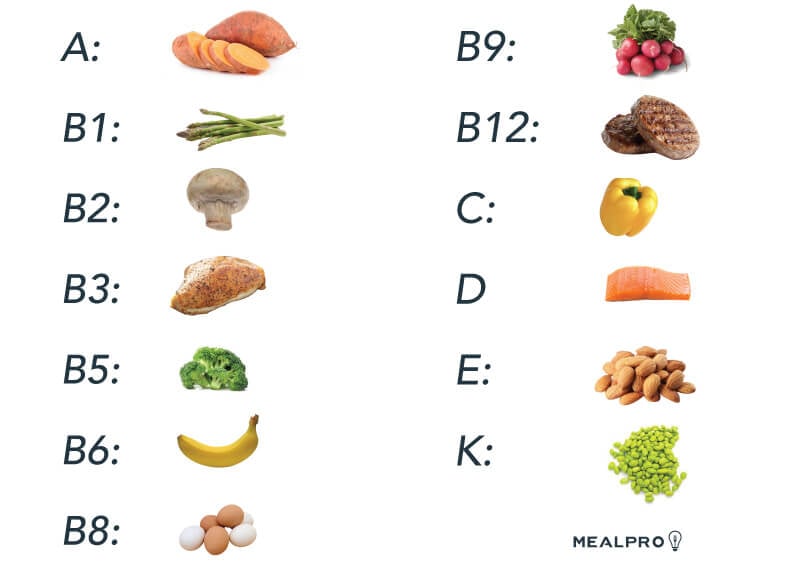
Credit: www.mealpro.net
Protein Sources With Vitamins
Protein sources are not just about building muscles. They also provide essential vitamins. These vitamins support energy, immunity, and overall health. Eating a variety of protein foods ensures you get different vitamins your body needs.
Lean Meats And Poultry
Lean meats like chicken and turkey are rich in vitamin B6. This vitamin helps the body use energy from food. They also contain niacin, which supports brain function and skin health. Lean meats provide iron, important for healthy blood.
Fatty Fish
Fatty fish such as salmon, mackerel, and sardines offer vitamin D. This vitamin helps bones stay strong. Fish also contains vitamin B12, which supports nerve function and red blood cell production. Omega-3 fatty acids in fatty fish reduce inflammation and improve heart health.
Eggs And Dairy
Eggs are a good source of vitamins A, D, and B12. Vitamin A helps keep eyes and skin healthy. Dairy products like milk and yogurt provide calcium and vitamin D for strong bones. They also offer riboflavin and vitamin B12, which aid in energy production.
Healthy Fats And Vitamin Absorption
Healthy fats play a key role in absorbing certain vitamins from food. Vitamins A, D, E, and K are fat-soluble. This means your body needs fat to absorb and use them well. Without enough healthy fats, these vitamins may pass through the body unused. Including sources of good fats in your diet helps your body get the full benefit of these vitamins.
Nuts And Seeds
Nuts and seeds contain healthy fats that support vitamin absorption. Almonds, walnuts, and chia seeds are rich in omega-3 and omega-6 fats. These fats help your body absorb vitamins like vitamin E. Nuts and seeds also offer protein and fiber, making them a nutritious snack choice.
Vegetable Oils
Vegetable oils like olive oil and avocado oil provide healthy fats that boost vitamin absorption. Using these oils in cooking or salads aids in absorbing fat-soluble vitamins. Olive oil is high in monounsaturated fats and antioxidants, which support overall health. Choose oils that are minimally processed for best benefits.
Avocados
Avocados are a delicious source of healthy fats that improve vitamin uptake. They are rich in monounsaturated fats and fiber. Adding avocado to meals helps absorb vitamins A, D, E, and K from other foods. Avocados also contain vitamins and minerals that support a balanced diet.

Credit: optimisingnutrition.com
Fortified Foods And Supplements
Fortified foods and supplements play a key role in helping people get enough vitamins. Some foods have vitamins added during processing. This helps boost nutrition in everyday diets. Supplements provide vitamins in pill, capsule, or liquid form. They support those who may not get enough from food alone.
Fortified Dairy And Alternatives
Dairy products like milk often have added vitamins A and D. These vitamins help keep bones strong. Plant-based milk alternatives such as almond, soy, and oat milk are also commonly fortified. They provide similar vitamin benefits for those who avoid dairy. Fortified yogurts and cheeses are other good options.
Vitamin-enriched Cereals
Many breakfast cereals contain added vitamins and minerals. These include B vitamins, iron, and folic acid. Eating fortified cereals helps fill nutritional gaps, especially for busy mornings. Choose cereals with whole grains and low sugar for better health.
When To Consider Supplements
Supplements can help when dietary intake is insufficient. People with certain health conditions or dietary restrictions may need them. Pregnant women, elderly adults, and vegans often benefit from supplements. Always consult a healthcare provider before starting vitamins. Proper use ensures safety and effectiveness.
Techniques To Identify Vitamins In Food
Identifying vitamins in food is essential to understand nutritional value. Scientists and nutritionists use various techniques to detect and measure vitamins accurately. These methods help ensure food quality and guide healthy eating choices.
Chromatography Methods
Chromatography separates vitamins from food mixtures. This method sorts vitamins based on their chemical properties. It provides clear identification of vitamins in complex food samples. Common types include liquid chromatography and gas chromatography. These techniques offer precise and reliable vitamin analysis.
Nutritional Databases
Nutritional databases list vitamin contents for many foods. They collect data from laboratory tests and scientific studies. These databases help people find vitamins in everyday foods easily. They serve as useful tools for meal planning and diet tracking. Examples include the USDA Food Database and other regional resources.
Laboratory Analysis
Laboratory analysis measures vitamin levels with advanced instruments. Techniques like spectrophotometry and mass spectrometry are often used. Labs prepare food samples and test for specific vitamins. This process ensures accurate vitamin quantification. Results from labs guide nutrition labeling and food research.
Combining Foods For Better Vitamin Intake
Combining foods can improve vitamin absorption and boost health benefits. Some vitamins work better together, helping your body use nutrients more efficiently. Pairing the right foods can enhance vitamin intake and support overall wellness.
Synergistic Nutrient Pairings
Certain vitamins need other nutrients to absorb well. Vitamin D helps the body absorb calcium, which strengthens bones. Eating spinach with a little olive oil increases the absorption of vitamin A and K. Vitamin C found in citrus fruits boosts iron absorption from plant sources like beans. These pairs create a synergy that makes nutrients more available for your body.
Meal Planning Tips
Plan meals that include complementary foods for better vitamin intake. Combine fruits and vegetables with healthy fats to improve vitamin absorption. For example, add avocado to a salad rich in leafy greens. Include a source of vitamin C with iron-rich meals, such as bell peppers with lentils. Simple food combinations can make your meals more nutritious and tasty.
Frequently Asked Questions
Where Can Vitamins Be Found In Food?
Vitamins are found in fruits, vegetables, whole grains, beans, legumes, dairy, eggs, and animal fats. These foods provide essential nutrients for health.
Which Food Has All 13 Vitamins?
Liver contains all 13 essential vitamins in significant amounts. It supports overall health and nutrient balance naturally.
What Food Adds 33 Minutes To Your Life?
Eating a Peanut Butter and Jelly (PB&J) sandwich adds 33 minutes to your life. It provides healthy fats, protein, whole grains, and fruit.
How Do They Find Vitamins In Food?
Scientists use chromatography to separate and identify vitamins in food. This method detects vitamin types and amounts accurately.
Conclusion
Vitamins come from many common foods we eat daily. Fruits and vegetables offer essential vitamins like A and C. Whole grains provide B vitamins for energy and health. Beans and legumes add minerals and fiber to meals. Dairy products supply vitamin D and calcium for strong bones.
Including a variety of these foods helps meet daily vitamin needs. Simple food choices support overall health and well-being. Eating balanced meals makes vitamin intake easy and natural.

“As the voice behind Radiant Glow Health, we are dedicated to being your ultimate wellness and vitality companion. Our mission is to inspire and guide you on your journey to a healthier and more vibrant life. Join us as we explore holistic health practices and empower you to radiate wellness from within.”