Are you wondering if you should exercise while on your period? It’s a question many ask, especially when cramps, fatigue, or mood swings hit.
The truth is, working out during your period can actually help ease discomfort and boost your mood—but only if you listen to your body. You’ll discover how exercising on your period can relieve pain, increase energy, and improve your overall well-being.
Plus, you’ll learn what types of workouts to try and when to take it easy. Keep reading to find out how to make your period workouts work for you!
Benefits Of Exercising On Your Period
Exercising during your period offers several benefits that support both your body and mind. Moving your body can ease common menstrual discomforts and boost your overall well-being. Physical activity helps regulate symptoms and makes the menstrual phase more manageable.
Pain Relief And Reduced Bloating
Exercise releases endorphins, the body’s natural painkillers. These hormones reduce cramps and headaches. Moving your muscles also helps decrease bloating by improving digestion and reducing water retention. Light activities can ease discomfort without straining your body.
Mood Enhancement
Physical activity lifts your mood by increasing serotonin levels. It helps reduce feelings of irritability, anxiety, and sadness common during periods. Exercise provides a natural way to fight mood swings and promotes relaxation and calmness.
Increased Energy Levels
Periods can cause tiredness, but exercise may boost your energy. Moving your body increases blood circulation and oxygen flow to muscles. This process helps reduce fatigue and makes you feel more awake and alert throughout the day.
Improved Blood Flow
Exercise improves circulation, which can make your period flow more smoothly. Better blood flow helps reduce clotting and prevents cramps. Gentle movement supports your body’s natural functions during menstruation.
Credit: sofreshnsogreen.com
Types Of Exercises To Try
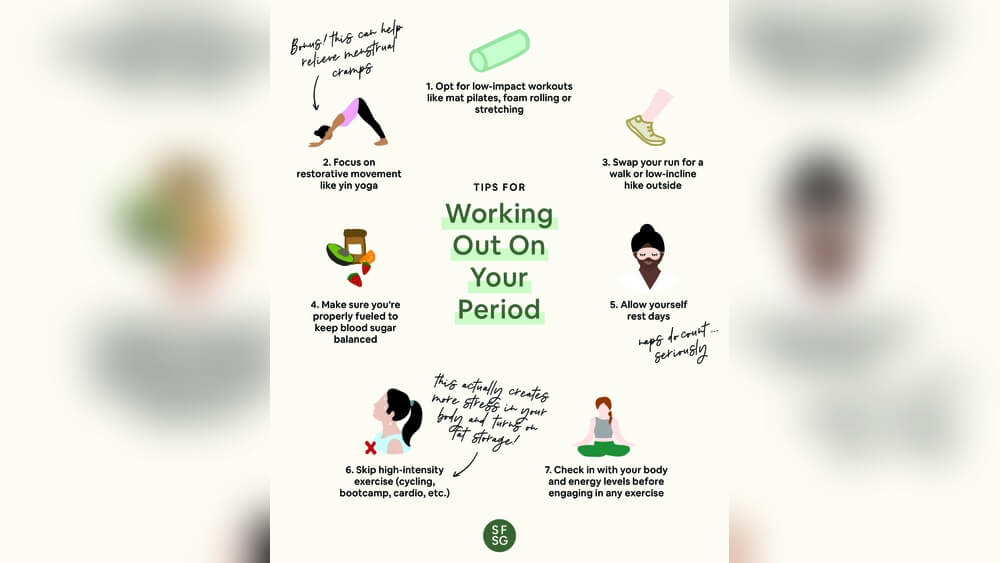
Exercise during your period can help ease discomfort and improve your mood. Choosing the right type of exercise matters. Some days call for gentle movements, while others may feel good for more intense workouts. Here are exercise types to consider based on how you feel.
Low-intensity Activities
Low-intensity exercises are gentle and easy on your body. Walking is a simple way to stay active without strain. Gentle yoga stretches muscles and calms the mind. Swimming offers a soothing full-body workout with little impact. Pilates and light cycling improve flexibility and circulation. These activities help reduce cramps and bloating.
Moderate To High-intensity Workouts
On days with more energy, moderate to high-intensity workouts can work well. Cardio exercises like jogging or brisk cycling boost blood flow. Strength training helps maintain muscle and bone health. Dancing or aerobic classes lift your mood and energy levels. Always start with a warm-up and stop if you feel pain or dizziness.
Focus On Technique And Form
Proper technique lowers injury risk and improves results. Pay attention to your posture during all exercises. Use lighter weights or resistance during your period to avoid strain. Controlled movements matter more than speed or power. Good form supports your body and helps you feel better.
Signs To Modify Or Avoid Exercise
Knowing when to change or stop your exercise routine during your period matters. Some signs show your body needs a break or lighter activity. Paying attention to these signs helps keep you safe and comfortable.
When To Skip Heavy Lifting
Heavy lifting can strain your body more during your period. If you feel sharp pain or pressure in your abdomen or lower back, avoid heavy weights. Your muscles and joints might feel weaker or more sensitive. Switch to lighter weights or skip strength training for the day.
Listening To Fatigue And Pain
Feeling very tired or in pain is a clear sign to slow down. Intense cramps, headaches, or dizziness mean your body needs rest. Exercise should not add stress or discomfort. Choose gentle movements like stretching or slow walking if you want to stay active.
Importance Of Rest Days
Rest days give your body time to heal and regain energy. Taking breaks during your period supports recovery and balances hormones. Do not push yourself to exercise hard every day. Rest helps reduce inflammation and improve your mood.
:max_bytes(150000):strip_icc()/exercise-effects-on-menstruation-4104136-5c04719446e0fb0001d4639e.png "Are You Supposed to Exercise on Your Period: Truths Revealed 3")
Credit: www.verywellhealth.com
Hormonal Effects On Workout Performance
Hormones play a big role in how your body reacts to exercise during your period. They affect your energy, strength, and how your body uses fuel. Understanding these changes helps you plan workouts that feel good and match your body’s needs. Your menstrual cycle causes shifts in estrogen and progesterone. These shifts can make workouts feel easier or harder on different days.
Energy Fluctuations During Cycle
Energy levels rise and fall across the menstrual cycle. At the start of your period, energy may drop due to low hormone levels. Many feel tired or sluggish. As the cycle moves toward ovulation, energy often peaks. This is when estrogen is highest and can boost stamina. After ovulation, progesterone rises. It can cause fatigue and lower endurance. Knowing these patterns helps you plan rest or active days.
Carbohydrate Utilization
Hormones affect how your body uses carbohydrates for fuel. High estrogen levels improve how muscles use carbs. This means you may burn energy more efficiently before ovulation. During the luteal phase, higher progesterone can reduce carb use. Your body relies more on fat for energy then. This can change how you feel during high-intensity workouts. Adjusting your diet with more carbs around ovulation may support better performance.
Adjusting Intensity Based On Hormones
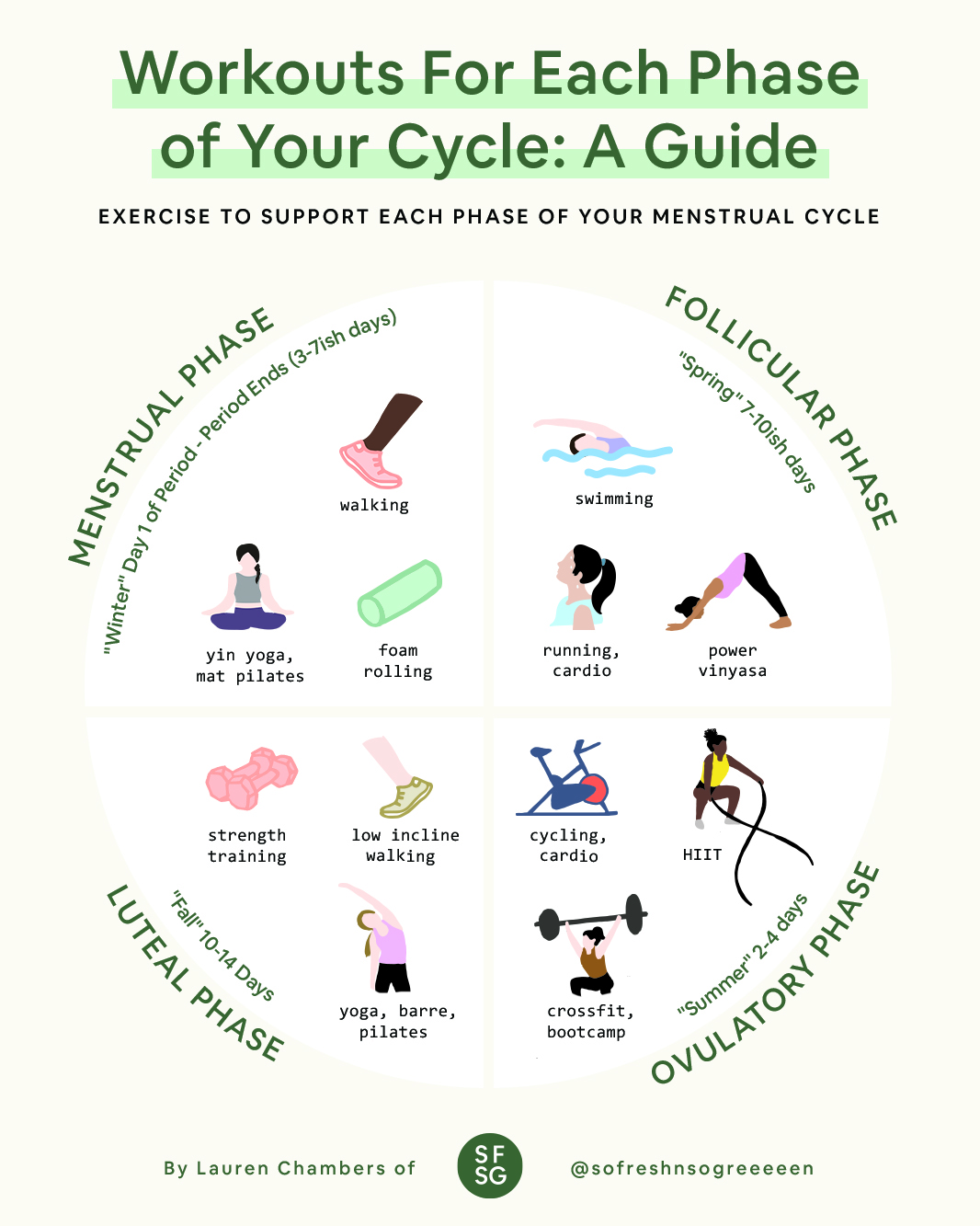
Exercise intensity can match your hormonal cycle. Low energy days call for gentle workouts like walking or yoga. On high energy days, try more intense cardio or strength training. Listen to your body and avoid pushing through pain or extreme fatigue. Hormones also affect recovery. You may need more rest after tough sessions during your period. Adjusting workout intensity helps keep your routine safe and effective.
Common Myths About Period Exercise
Many people have wrong ideas about exercising during periods. These myths stop women from staying active when they need it most. Exercise does not always make cramps worse. Periods do not always mean complete rest. High-intensity workouts are not always harmful. Knowing the facts helps make better choices about period exercise.
Exercise Worsens Cramps
Some think exercise makes cramps worse. This is not true. Light exercise can reduce cramps by increasing blood flow. Movement releases endorphins that act as natural painkillers. Gentle yoga, walking, or stretching often ease discomfort. Avoid very intense workouts if pain is strong. But mild exercise usually helps more than it harms.
Periods Require Complete Rest
Many believe total rest is needed during periods. Rest can be helpful on tough days. Still, complete inactivity may increase fatigue and mood swings. Light exercise helps lift energy and reduce bloating. It also improves mood by releasing feel-good hormones. Rest only when the body truly needs it. Moderate activity often supports better overall health during periods.
High-intensity Workouts Are Harmful
Some say high-intensity workouts harm the body during periods. This is a myth for most women. Hormonal changes can boost energy and strength. Some women feel stronger and more motivated for tough workouts. Listening to your body is key. If feeling good, high-intensity exercise is safe. Lower intensity is better on low-energy days. Choose the workout that fits your current state.
Tips For Exercising Comfortably
Exercising during your period can feel different each time. Comfort plays a big role in making your workout enjoyable and effective. Simple tips help you move with ease and reduce discomfort. Focus on what feels good for your body and adjust as needed.
Choosing Appropriate Workout Gear
Wear breathable, soft fabrics that wick away sweat. Tight clothes may cause irritation or cramps. Use high-quality, supportive underwear or period-proof activewear. Choose shoes that fit well and provide good support. Changing gear promptly after exercise prevents discomfort and infections.
Hydration And Nutrition
Drink plenty of water before, during, and after workouts. Staying hydrated reduces bloating and fatigue. Eat balanced meals with protein, healthy fats, and complex carbs. Include iron-rich foods to replace what your body loses. Avoid heavy or greasy foods that may cause sluggishness.
Mindful Movement And Breathing
Listen to your body’s signals and move gently. Try slow stretches or yoga to ease cramps. Focus on deep, steady breaths to relax muscles and calm your mind. Avoid pushing too hard; rest if you feel pain. Mindful movement helps improve mood and reduces tension.
Adapting Your Routine Over Time
Adapting your exercise routine over time helps you stay comfortable and consistent. Your energy and symptoms change throughout your cycle. Adjusting workouts allows you to benefit from exercise without feeling overwhelmed.
Tracking your body’s signals helps you plan better workouts. Not every day feels the same, so a flexible routine works best.
Tracking Your Cycle And Energy
Keep a simple record of your menstrual cycle and energy levels. Note how you feel before, during, and after your period. This data shows patterns in your strength and stamina. Use this to decide when to do intense or light workouts.
Cycle-synced Training Approaches
Match your workout type to your cycle phase for better results. During your period, focus on gentle movements like yoga or walking. After your period, you may have more strength for cardio or lifting. Adjust intensity based on your body’s signals.
Flexibility In Workout Plans
Allow room for changes in your routine. Some days you might need rest or low-impact exercise. Other days, you may feel ready for a harder session. Listen to your body and swap workouts to fit your current energy and mood.

Credit: proovtest.com
Frequently Asked Questions
Is It A Good Idea To Workout On Your Period?
Yes, exercising on your period helps reduce cramps, boost mood, and increase energy. Choose light activities or adjust intensity based on how you feel. Rest if you experience pain or fatigue. Listening to your body ensures safe and effective workouts during menstruation.
What Exercises Should Be Avoided During Periods?
Avoid heavy lifting and intense workouts if you feel fatigued or sore during your period. Skip high-impact exercises that increase discomfort. Do not ignore pain; rest or choose gentle activities instead. Prioritize listening to your body and adjust exercise intensity accordingly.
What Is The 3-3-3 Rule Gym?
The 3-3-3 rule gym means doing 3 exercises, 3 sets each, with 3 minutes rest between sets. It boosts strength and endurance effectively.
Is It Ok To Skip Exercise On Your Period?
Skipping exercise on your period is okay if you feel tired or in pain. Rest or try light activities like walking or yoga. Exercise can relieve cramps and boost mood, but always listen to your body’s needs and adjust your routine accordingly.
Conclusion
Exercise during your period can help ease discomfort and improve mood. Choose activities that feel good and adjust effort as needed. Rest is important when your body feels tired or sore. Light walks or gentle yoga often work well on low-energy days.
Some may enjoy more intense workouts when feeling strong. The key is to listen closely to your body’s signals. Staying active can support your health, but comfort comes first. Keep it simple, and find what suits you best each month.
Your period is not a barrier to staying active.

“As the voice behind Radiant Glow Health, we are dedicated to being your ultimate wellness and vitality companion. Our mission is to inspire and guide you on your journey to a healthier and more vibrant life. Join us as we explore holistic health practices and empower you to radiate wellness from within.”