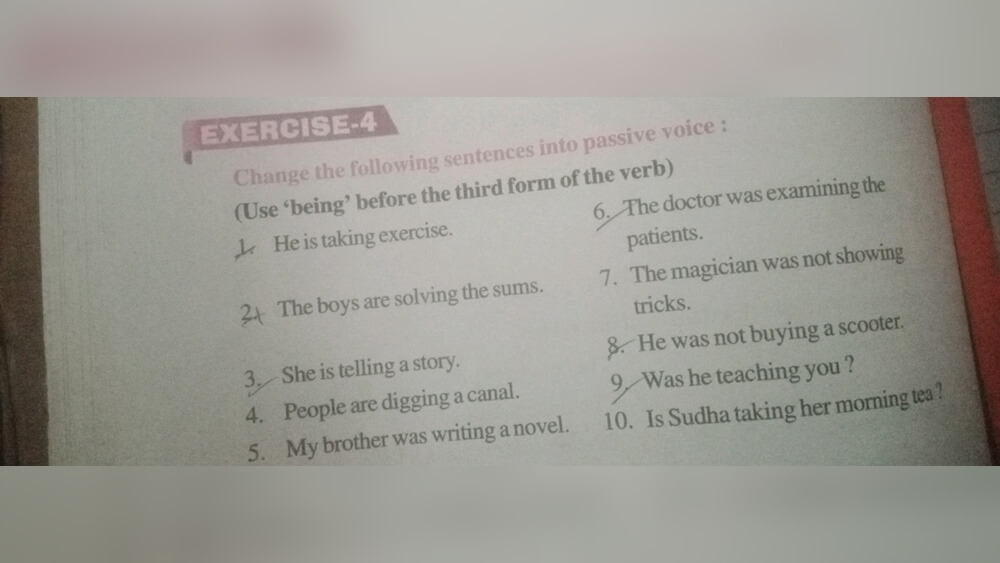
Are you ever unsure how to change the sentence “Do you take exercise?” Into passive voice?
You’re not alone. Many learners find this shift tricky because it involves more than just swapping words—it’s about changing the sentence’s focus. When you master this, you’ll know exactly when and how to use passive voice correctly, making your English clearer and more polished.
Stick with me, and by the end of this article, you’ll confidently transform active sentences about exercise into perfect passive forms every time. Ready to make your grammar stronger? Let’s dive in!

Credit: askfilo.com
Active And Passive Voice Basics
Active and passive voices are two ways to express actions in English. Understanding their basics helps in writing clearly. The active voice shows who does the action. The passive voice focuses on the action itself or its receiver.
Changing sentences from active to passive involves shifting the focus. This change affects sentence structure and meaning. Knowing the differences and common patterns is key to mastering voice change.
Differences Between Voices
In the active voice, the subject performs the action. For example, “You take exercise daily.” The sentence shows the doer clearly.
In the passive voice, the subject receives the action. For example, “Exercise is taken by you daily.” The focus is on the exercise, not the doer.
The passive voice often uses a form of “to be” plus the past participle. The doer may be included with “by” or left out if unknown or unimportant.
Common Sentence Structures
Active voice sentences usually follow subject + verb + object. Example: “She eats an apple.”
Passive voice sentences change to object + form of “to be” + past participle + (optional) “by” + subject. Example: “An apple is eaten by her.”
Questions in active voice like “Do you take exercise?” become “Is exercise taken by you?” in passive voice. The helping verb changes accordingly.
Credit: www.liveworksheets.com
Rules For Changing To Passive Voice
Changing sentences into passive voice follows specific rules. These rules help keep meaning clear and grammar correct. Understanding these rules makes the process easier. The focus shifts from the doer to the action or object.
Identifying Subject And Object
The subject in the active sentence becomes optional in passive sentences. The object of the active sentence becomes the subject in the passive sentence. For example, “You take exercise” changes to “Exercise is taken by you.” The original doer can be left out if unimportant.
Using Correct Verb Forms
The main verb changes to a past participle form in passive voice. A form of the verb “to be” is added before the past participle. The correct form of “to be” matches the new subject. For example, “take” becomes “is taken” or “was taken.”
Tense Adjustments
Tense in passive voice matches the tense in active voice. Present simple uses “is” or “are” plus past participle. Past simple uses “was” or “were” plus past participle. Future uses “will be” plus past participle. This keeps the time of action clear.
Passive Voice With Exercise Sentences
Understanding passive voice with exercise sentences helps improve English skills. Passive voice focuses on the action or the object receiving the action. The subject performing the action is often not mentioned. This is useful when the doer is unknown or unimportant. Practice with different tenses enhances learning and clarity.
Examples In Simple Present Tense
Active: Do you take exercise every day?
Passive: Is exercise taken by you every day?
Active: You take exercise regularly.
Passive: Exercise is taken regularly by you.
Active: They take exercise in the morning.
Passive: Exercise is taken in the morning by them.
Examples In Other Tenses
Active: You took exercise yesterday.
Passive: Exercise was taken by you yesterday.
Active: You will take exercise tomorrow.
Passive: Exercise will be taken by you tomorrow.
Active: You have taken exercise today.
Passive: Exercise has been taken by you today.
When To Use Passive Voice
Passive voice is used to highlight the action rather than the doer. It is helpful when the focus is on what happens. The doer can be unknown, unimportant, or obvious from context. This makes sentences clearer and sometimes more polite.
Choosing passive voice depends on the message you want to share. It changes how the information is presented. Understanding when to use it improves your writing skills.
Focusing On The Action
The action is emphasized in passive voice sentences. For example, “Exercise is taken daily” focuses on the exercise, not who takes it. The action becomes the main point to notice. This style suits instructions and descriptions well.
Omitting The Doer
The doer can be left out in passive voice. Sentences like “The homework was completed” do not say who completed it. This is useful when the doer is unknown or not important. The sentence still makes sense and delivers the key message.
Formal And Written Contexts
Passive voice is often found in formal writing and reports. Scientific papers and manuals use it to sound objective. The focus stays on facts and results, not people. This style suits professional and academic texts well.
Common Mistakes To Avoid
Common mistakes are often made when changing active sentences into passive voice. These errors can confuse readers and change the intended meaning. Attention to detail is needed to avoid such problems. Understanding these common errors helps improve writing clarity and accuracy.
Incorrect Verb Agreement
Verb agreement errors occur when the verb does not match the subject in number or tense. In passive voice, the verb form must agree with the new subject. For example, “Exercise is taken” is correct, but “Exercise are taken” is wrong. Care must be taken to use the correct form of “to be” with the past participle.
Misplacing ‘by’ Phrase
The “by” phrase shows who performs the action in passive sentences. Mistakes happen when this phrase is placed incorrectly or omitted when needed. The phrase should follow the verb to clearly indicate the doer. For example, “Exercise is taken by you” is correct, not “By you exercise is taken.”
Changing Meaning Unintentionally
Changing voice may alter the sentence’s original meaning if done carelessly. Some active sentences lose important details when converted to passive. For example, “Do you take exercise?” becomes “Is exercise taken by you?” but may sound less direct. Ensure the intended message stays the same after the change.
Practice Exercises
Practice exercises help learners understand how to change sentences from active to passive voice and vice versa. These exercises improve grammar skills and sentence structure awareness. They focus on clear examples to make learning simple and effective.
Each exercise targets a specific skill. Some ask to convert active sentences into passive ones. Others require changing passive sentences back to active voice. Answer keys support self-checking and deeper understanding.
Active To Passive Conversion
In these exercises, active sentences are given. The task is to rewrite them in passive voice. For example, “You take exercise daily” becomes “Exercise is taken daily by you.” This practice builds confidence with passive forms.
Passive To Active Conversion
Here, passive sentences must be changed to active voice. For instance, “Exercise is taken by you” changes to “You take exercise.” These exercises help learners recognize subject and object roles clearly.
Answer Keys And Explanations
Answer keys are provided for all exercises. Each answer includes a brief explanation. This shows why the sentence changes in a certain way. Understanding the reason behind changes aids long-term learning and retention.
Tips For Mastering Passive Voice
Tips for mastering passive voice can improve your English writing and speaking skills. Passive voice helps to shift focus from the doer to the action or the receiver of the action. Understanding how to use it correctly requires practice and some useful strategies. Below are simple tips that will help you learn passive voice effectively.
Regular Practice
Sentences should be changed from active to passive regularly. This practice builds familiarity with the structure. Start with simple sentences like “You take exercise” changed to “Exercise is taken by you.” Gradually, try more complex sentences. Writing daily exercises is encouraged to make learning natural.
Reading Examples
Examples of passive voice should be read often. Reading helps to see how sentences are formed. Books, articles, and websites often use passive voice. Notice how the subject and verb change. This exposure helps to understand the correct usage without confusion.
Using Grammar Tools
Grammar tools can be used to check passive voice sentences. Many online tools highlight passive voice and suggest corrections. They help to spot errors and improve sentence structure. Using these tools regularly supports learning and builds confidence in writing.

Credit: www.scribd.com
Frequently Asked Questions
Do You Take Exercise In Passive Voice?
The passive voice of “Do you take exercise? ” Is “Is exercise taken by you? ” It focuses on the action, not the doer.
When To Use Passive Voice Exercises?
Use passive voice exercises to focus on the action, when the doer is unknown or unimportant. Practice helps master sentence structure and improve writing variety.
What Is The Rule For Passive Voice Change?
To change active to passive voice, make the object the subject. Use “to be” + past participle of the verb. Include the original subject after “by” if needed.
How To Change Active To Passive Voice Exercises?
To change active voice to passive, make the object the subject. Use “to be” plus the verb’s past participle. Include the original subject after “by” if needed.
Conclusion
Changing sentences from active to passive voice helps shift focus in communication. Use passive voice when the action matters more than the doer. Remember to swap the object and subject and adjust the verb form carefully. Practice with simple sentences like “You take exercise” to see how it becomes “Exercise is taken by you.
” This skill improves your understanding of English grammar and sentence variety. Keep practicing to gain confidence and clarity in your writing and speaking. Passive voice adds flexibility to your language use.

“As the voice behind Radiant Glow Health, we are dedicated to being your ultimate wellness and vitality companion. Our mission is to inspire and guide you on your journey to a healthier and more vibrant life. Join us as we explore holistic health practices and empower you to radiate wellness from within.”